

Newer Treatment Options for Prostate Cancer: What Patients Should Know

Newer Treatment Options for Prostate Cancer: What Patients Should Know
Prostate cancer treatment has advanced significantly in recent years. Today, treatment can be increasingly personalized according to the stage of the cancer, PSA level, Gleason/Grade Group, imaging findings, genetic features, age, and overall health. Not every patient needs the same treatment, and some men with low-risk disease may not need immediate treatment at all.
1. Robotic-Assisted Prostate Surgery
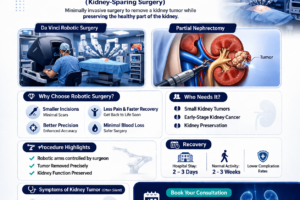
For suitable patients with localized prostate cancer, robotic-assisted radical prostatectomy is an established minimally invasive surgical approach. The prostate and, when required, nearby lymph nodes are removed through small incisions. The robotic platform provides the surgeon with magnified 3D vision and precise instrument movement. Recovery, urinary control and sexual function vary between patients.
2. Focal therapy
Focal therapy is a minimally invasive treatment approach mainly used for selected patients with localized prostate cancer. Instead of treating or removing the entire prostate, it targets only the cancerous area while preserving as much normal prostate tissue as possible.
Common focal therapy techniques include HIFU (High-Intensity Focused Ultrasound), cryotherapy, irreversible electroporation (IRE/NanoKnife), and in some centres laser or other energy-based ablation.
3. Advanced Radiation Therapy
Modern radiation techniques can deliver radiation more accurately while reducing exposure to surrounding organs. Options include IMRT, image-guided radiotherapy and stereotactic body radiation therapy (SBRT). In selected patients, radiation may be combined with hormone therapy.
4. Newer Hormonal Treatments
Prostate cancer often depends on male hormones called androgens. In addition to traditional androgen deprivation therapy (ADT), newer androgen-pathway medicines can provide better cancer control in appropriate patients with advanced or metastatic disease.
5. PSMA-Targeted Radioligand Therapy
One of the important advances in advanced prostate cancer is Lutetium-177 PSMA therapy. It targets prostate cancer cells expressing PSMA (prostate-specific membrane antigen) and delivers radiation directly to them. Patient selection generally involves PSMA-based imaging.
6. Immunotherapy
Immunotherapy helps the body’s immune system recognize or attack cancer. It is not suitable for every prostate cancer patient, but selected men with advanced disease and particular clinical or molecular characteristics may benefit from immune-based treatments.
The Future Is More Personalized
Modern prostate cancer care is moving toward precision medicine—choosing treatment based not only on where the cancer is located, but also on its stage, imaging characteristics and genetic profile.
Choosing the Right Treatment
There is no single “best” treatment for every prostate cancer patient. Modern management increasingly combines accurate staging, advanced imaging, surgery, radiation, hormonal therapy and molecular/genetic testing to select the most appropriate treatment.
Early consultation with an experienced urologist/uro-oncologist and multidisciplinary cancer team can help patients understand their options and choose an individualized treatment plan.
This article is for patient education and does not replace individual medical consultation
Related posts
Recent Posts


